




Aftercare after nanoplasty – which shampoo, which mask and which routine after the treatment?
Aftercare after nanoplasty is one of the most important parts of the final result. The fact that the hair looks smooth, straight and glossy after leaving the salon does not mean that the effect will stay perfect for months without the right home routine. Nanoplasty can deliver a spectacular transformation, but daily washing, drying, styling, brushing and product choice have a direct influence on how long the effect remains visible.
That is why a professional treatment should not end at the flat iron stage. The client needs to know which shampoo after nanoplasty to use, which mask works best, what to avoid, how often to wash the hair, whether hair oil can be used, how to dry the hair and how to protect the ends. For the salon, this is also very important, because proper aftercare reduces complaints and increases client satisfaction.
Hair nanoplasty is a smoothing and straightening treatment, but it does not replace regular care. After the treatment, the hair still needs gentle cleansing, hydration, protection of the lengths and maintenance of the smoothing effect. If aftercare is random, the effect may weaken faster, the hair may lose shine, the ends may start to look dry and the strands may react more strongly to humidity again.
Why is aftercare after nanoplasty so important?
Aftercare after nanoplasty determines whether the result looks beautiful only during the first days or remains visible for much longer. Professional technique in the salon is the foundation, but afterwards the hair comes into contact every week with water, shampoo, a blow dryer, a brush, hair ties, towels, humidity, sun and styling products. Each of these factors can either support or weaken the smoothing effect.
After nanoplasty, the main goal is to keep the hair soft, flexible, glossy and smooth. The hair does not need aggressive cleansing at every wash. It should not be dried out by harsh products. It also should not be treated as if it still needs daily intensive straightening with high heat. The treatment should make everyday styling easier, but a smart routine is still necessary.
The best routine after nanoplasty is based on three rules: mild cleansing, regular nourishment and protection of the smoothing effect. When these three elements are in place, the hair usually stays lighter, shinier, straighter and more pleasant to touch for longer.
What happens to the hair after nanoplasty?
After correctly performed nanoplasty, the hair should be visibly smoother, better controlled, easier to dry and less prone to frizz. For the client, the biggest difference is usually visible after the first washes: the hair falls into shape more easily, requires less intense blow-drying and does not immediately return to its previous volume or frizz pattern.
This does not mean that hair after the treatment becomes indestructible. The ends can still become dry, the hair can lose shine, become tangled after an unsuitable shampoo or feel heavy after a mask that is too rich. That is why hair after nanoplasty needs products that do not work against the result, but help preserve it.
The most common needs of hair after nanoplasty are:
- gentle cleansing of the scalp and lengths,
- maintenance of softness and elasticity,
- protection against dry ends,
- less frizz after washing,
- preservation of shine and the smooth glass hair effect,
- easier combing without pulling,
- protection against heat during drying and styling.
The better the aftercare routine responds to these needs, the greater the chance that the hair will look beautiful not only directly after the salon visit, but also after many future washes.
Which shampoo after nanoplasty should you choose?
Shampoo after nanoplasty should be mild, suitable for hair after smoothing treatments and safe for regular use. Its job is to cleanse the scalp and hair without unnecessarily weakening the effect of the treatment and without aggressively drying out the lengths.
This is important because shampoo used after nanoplasty should not work like a deep cleansing shampoo before nanoplasty. A deep cleansing shampoo is needed before the treatment to remove sebum, silicones, product build-up and styling residue. After the treatment, the goal is completely different: to maintain the effect, cleanse gently and avoid disturbing the smoothness.
A good shampoo after nanoplasty should:
- cleanse the hair and scalp gently,
- support the effect of smooth hair,
- avoid drying out the lengths,
- not leave the hair rough after washing,
- make combing easier,
- fit care routines after straightening treatments,
- work well with a mask after nanoplasty.
In home care after the treatment, it is best to choose products created specifically for hair after smoothing and straightening services. One example is NanoGold Nanoplasty Care Shampoo 300ml, which can be included in a routine after nanoplasty and other smoothing treatments.
Can you use regular shampoo after nanoplasty?
Technically, you can wash the hair with a regular shampoo, but not every regular shampoo is a good choice after nanoplasty. The problem is not the word “regular”, but the action of the product. If a shampoo cleanses strongly, dries the hair out, leaves the hair rough or is designed to remove product build-up intensively, it may shorten the durability of the smoothing effect.
After nanoplasty, it is better not to use random products only because they are already in the bathroom. The client should receive a clear recommendation from the salon: which shampoo to use regularly, which product is safe for the treatment effect and what should not be used too often.
Is deep cleansing shampoo after nanoplasty a mistake?
Deep cleansing shampoo after nanoplasty can be a serious mistake when used too often. This type of product has a different purpose than aftercare. Before the treatment, it helps prepare the hair. After the treatment, it may cleanse too strongly and weaken the smoothing effect faster.
This does not mean that hair after nanoplasty can never be cleansed more thoroughly. It means that deep cleansing should not be the basis of the daily routine. Regular aftercare should be based on a mild shampoo, not on a product designed to prepare the hair for chemical or intensive cleansing procedures.
Which mask after nanoplasty is best?
A mask after nanoplasty is just as important as shampoo. Shampoo is responsible for cleansing, while the mask supports softness, shine, elasticity and smoothness of the lengths. After the treatment, the hair is easier to style, but it still needs regular care, especially on the ends.
A well-chosen mask after nanoplasty helps keep the hair smooth, soft and light. It should not make the hair so heavy that it loses movement. It should also not be too weak, because then the ends may quickly start to look dry. The best mask is one that supports the effect of the treatment and also matches the actual condition of the hair.
For a complete routine, you can choose Nano Gold hair care set after nanoplasty – shampoo + mask 1000 ml + 1000 g or the compact version NanoGold Nanoplasty Care Mask 300g. These are practical options for clients who want their home care to match the effect of nanoplasty.
How often should you use a mask after nanoplasty?
How often you use a mask depends on the hair type. Fine hair that becomes heavy quickly usually needs less product and a shorter processing time. Thick, dry, porous or blonde hair often needs more regular care on the lengths and ends.
A good starting point is using a mask once or twice a week. With dry hair, it can be used more often, but always with control of the result. If the hair feels soft, smooth and light after the mask, the routine is well chosen. If the hair becomes heavy, quickly loses volume at the roots or looks overconditioned, use less product, shorten the processing time or apply the mask only to the lengths and ends.
Where should you apply a mask after nanoplasty?
A mask after nanoplasty usually does not need to be applied directly to the scalp. The most important areas are the lengths and ends, because this is where the hair loses moisture, shine and elasticity the fastest. On fine hair, applying a rich mask too close to the roots may cause the hair to become greasy faster and lose lightness.
The safest technique is to apply the mask from the mid-lengths down, with extra attention to the ends. After the processing time, rinse the product thoroughly so the hair stays soft but not heavy.
Aftercare after nanoplasty for blonde hair
Blonde hair after nanoplasty needs extra attention. Bleached hair is often more porous, more sensitive and more prone to dryness. In addition, cool blonde shades may need care that helps reduce unwanted warm tones and keeps the colour looking more elegant.
With blonde hair, it is important not to choose random products only because they say “for blonde hair”. After nanoplasty, care has to perform two tasks at the same time: support the smoothing effect and protect the quality of the colour. If a product is too drying, the hair may lose softness and start to look dull.
For blonde hair after smoothing treatments, Nano Blue set for blonde hair after nanoplasty – shampoo + mask 1000 ml + 1000 g can be a strong choice. This set is created for light hair types that need care, smoothness and colour support after nanoplasty.
What should you avoid after nanoplasty?
The biggest mistakes after the treatment usually do not come from bad intentions, but from lack of clear information. The client goes home, uses whatever is already in the bathroom, dries the hair as usual and only after a few washes notices that the result is not as long-lasting as expected. That is why the salon should clearly explain what to avoid after nanoplasty.
After the treatment, it is best to limit or avoid:
- frequent use of strong cleansing shampoos,
- strongly drying hair products,
- random products not suitable for hair after treatments,
- sleeping with wet hair,
- rough towel rubbing,
- tying wet hair tightly with an elastic band,
- daily straightening without heat protection,
- too many heavy oils or coating products,
- skipping masks or care for the lengths.
The most harmful situation is when several mistakes happen at once. If the client washes the hair with a strong cleansing shampoo, does not use a mask, sleeps with wet hair and uses a straightener every day, the nanoplasty effect may fade faster even when the treatment itself was performed correctly.
Can you use hair oil after nanoplasty?
Hair oil can be useful after nanoplasty, but only when used wisely. A small amount on the ends can add shine, reduce frizz and protect dry areas. The problem appears when oil is used too often, too generously or over the full lengths when the hair does not need it.
Too much oil can make the hair heavy, reduce freshness and create the need for more frequent washing. More frequent washing, especially with the wrong shampoo, can indirectly shorten the durability of the effect. That is why oil after nanoplasty is best treated as a small extra product for the ends, not as the foundation of the whole routine.
Do you still need to straighten the hair after nanoplasty?
One of the biggest benefits of nanoplasty is that the hair usually does not need daily straightening after the treatment. If the treatment was performed correctly and the aftercare is well chosen, the hair should fall into place much more easily after washing. In many cases, a blow dryer, a brush and calm drying in the direction of the hair cuticle are enough.
Daily straightening after nanoplasty should not be necessary. If the client still has to straighten the hair intensively after every wash, it is worth checking whether the problem lies in the treatment technique, hair type, home care or expectations that were too high for the specific hair.
If a straightener is used occasionally, heat protection is still important. The hair looks better after the treatment, but the ends can still react to too much heat, especially on blonde or dry hair.
How should you dry hair after nanoplasty?
Drying hair after nanoplasty should support the smoothing effect. Do not rub the hair aggressively with a towel. Instead, gently squeeze out excess water. Then detangle carefully, starting at the ends and slowly moving upwards.
During blow-drying, it is best to direct the airflow in the direction of the hair cuticle, from top to bottom. This helps the cuticle lie flatter and makes the hair look smoother and more elegant. Chaotic drying in every direction can increase frizz and make the result look less polished.
For thick and long hair, drying in sections is recommended. The hair should be completely dry, especially at the roots and in the inner layers. Sleeping with damp hair may cause dents, frizz and a less beautiful result the next morning.
The best routine after nanoplasty step by step
A home routine after nanoplasty does not need to be complicated. The most important things are consistency and products that match the effect you want to maintain. The client does not need fifteen products she does not understand. A simple system often works better: shampoo, mask, protection of the ends and correct drying.
Basic routine after every wash
- Wash the hair with a mild shampoo after nanoplasty, focusing mainly on the scalp.
- Do not rub the lengths aggressively while washing; the foam running down the hair is usually enough to cleanse the lengths.
- Apply mask or conditioner to the lengths, especially to the ends.
- Rinse the product thoroughly, so the hair stays soft but not heavy.
- Gently squeeze the hair with a towel, without rough rubbing.
- Comb the hair carefully, starting at the ends.
- Dry the hair in the direction of the cuticle, with airflow from top to bottom.
Weekly routine for a longer-lasting effect
Once or twice a week, it is worth giving the hair extra attention. This is a good moment to leave the mask on a little longer, protect the ends more carefully and dry the hair calmly without rushing. This routine is especially important for long, blonde, dry or porous hair.
Hair after nanoplasty should always be observed. If the hair is soft, light and shiny, the routine is well chosen. If it becomes heavy, reduce the amount of mask or finishing product. If it becomes dry, strengthen the care of the lengths and ends.
Aftercare after nanoplasty in the salon – what should the hairdresser explain?
A professional salon should give the client specific instructions after the treatment. Saying “use a good shampoo” is too general. The client needs to know exactly which product to use, how often to apply a mask, what to avoid and how to dry the hair correctly.
The hairdresser should explain:
- which shampoo after nanoplasty is most suitable,
- which mask after nanoplasty can be used regularly,
- whether the hair can be washed immediately according to the procedure of the specific treatment,
- what to avoid during the first days,
- how to protect the hair from heat,
- how to care for the ends,
- when a new consultation or refresh treatment makes sense.
This helps the client understand that the result depends not only on the salon, but also on daily care. A well-informed client makes fewer mistakes and understands better why professional aftercare products matter.
How to adjust aftercare to the hair type after nanoplasty
Not every client needs exactly the same routine after nanoplasty. Fine, thick, blonde, natural, porous and coloured hair all require a different balance between cleansing, nourishment and protection of the ends. That is why aftercare after nanoplasty should be adjusted to the hair, not copied blindly.
Fine hair after nanoplasty
Fine hair needs extra attention to avoid overload. The shampoo should be mild, and the mask should mainly be applied to the lengths and ends. It is better to use a small amount of product more regularly than to weigh the hair down with too much mask or oil at once.
Thick hair after nanoplasty
Thick hair usually needs more nourishment on the lengths. It can often tolerate richer masks, but thorough rinsing remains important. Correct drying is also crucial for thick hair, because moisture trapped in the inner layers can cause frizz and dents.
Bleached hair after nanoplasty
Bleached hair requires the most caution. It may lose moisture faster, be more prone to dryness and need regular masking. With blonde hair, colour is also important, so the routine should support both smoothness and a beautiful blonde tone.
Products worth considering after nanoplasty
After nanoplasty, it is best to choose products developed for hair after smoothing treatments. At Diana Beauty, you can find both home care products and professional treatments for salons. This allows the salon to work with one logical system: treatment, aftercare and maintenance of the effect.
Interesting options include:
- NanoGold Nanoplasty Care Shampoo 300ml — for regular care after smoothing treatments,
- Nano Gold hair care set after nanoplasty – shampoo + mask 1000 ml + 1000 g — a practical large set for salons and intensive home care,
- NanoGold Nanoplasty Care Mask 300g — a compact size for home care,
- Nano Blue set for blonde hair after nanoplasty — for blonde hair that needs smoothness, softness and colour support,
- permanent hair straightening — category for professional smoothing and straightening treatments.
Aftercare after nanoplasty – key conclusion
Aftercare after nanoplasty is not a small extra detail, but part of the complete result. The salon treatment can make the hair beautifully smooth, but the daily routine determines how long that effect remains visible. The key elements are a mild shampoo, regular masking, protection of the ends, correct drying and avoiding aggressive cleansing.
A client who wants to maintain the effect of smooth and straight hair should treat home care as an extension of the treatment. When she uses products suitable for hair after nanoplasty, the hair usually stays softer, shinier, lighter and less prone to frizz for longer. When care is random, the effect may weaken faster.
For the salon, this is just as important. Well-chosen aftercare increases client satisfaction, supports the durability of the result and strengthens the professional character of the service. Nanoplasty does not end at the flat iron. The treatment is only complete when the client knows how to care for the hair at home.
Which shampoo after nanoplasty is best?
The best choice is a mild shampoo for hair after smoothing treatments. It should cleanse gently, avoid drying out the lengths and help keep the hair smooth, soft and easy to comb.
Can you use a deep cleansing shampoo after nanoplasty?
A deep cleansing shampoo is important before the treatment, but after nanoplasty it should not be the basis of the daily routine. Used too often, it can weaken the smoothing effect and dry out the lengths faster.
How often should you use a mask after nanoplasty?
Usually once or twice a week is enough. Dry, long, blonde or porous hair may need it more often. The hair should stay soft and shiny without becoming heavy or overconditioned.
What should you avoid after nanoplasty?
Avoid aggressive cleansing, sleeping with wet hair, rough towel rubbing, heavy products that coat the hair and daily straightening without heat protection.
How can you prolong the nanoplasty effect?
You can prolong the effect by using a mild shampoo, applying a suitable mask regularly, protecting the ends, drying the hair correctly and choosing products made for hair after smoothing and straightening treatments.
Related Posts
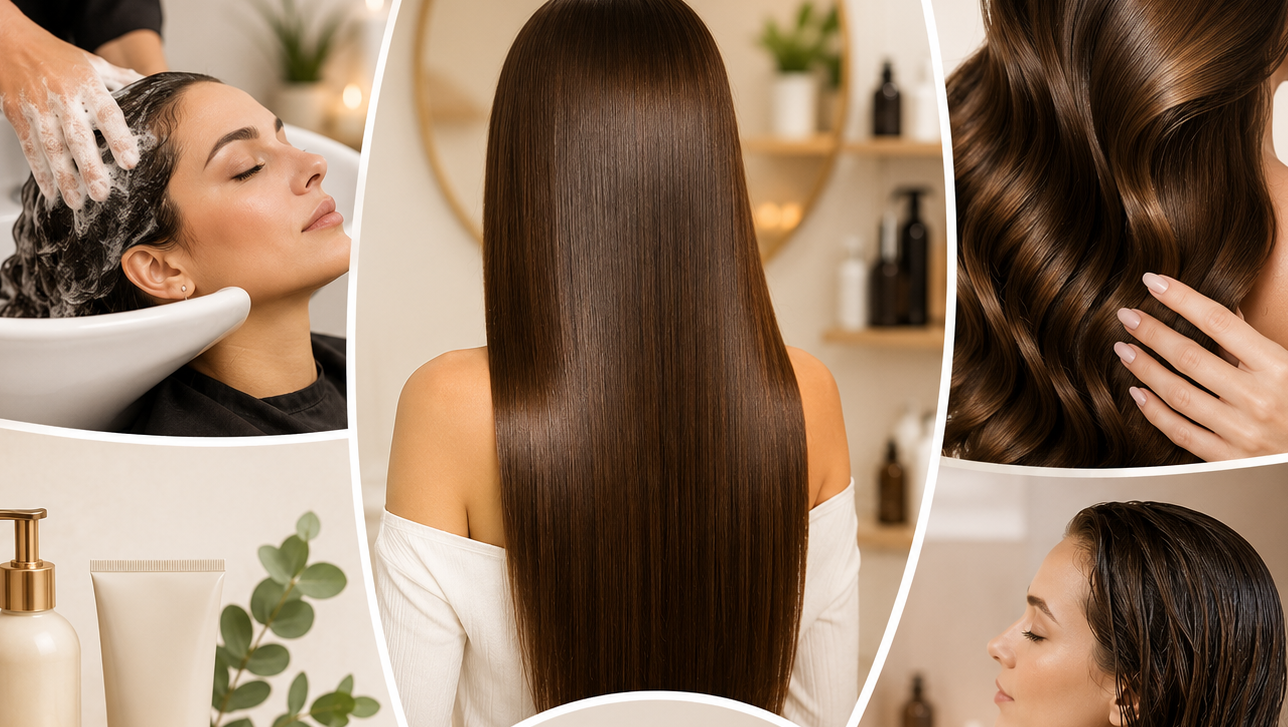
Aftercare after keratin, hair botox and nanoplasty should not always look the same, because each treatment works on the hair in a different way. Nanoplasty focuses mainly on strong smoothing and straightening, keratin and protein treatments support hair structure and smoothness, while hair botox is mainly about repair, softness, shine and reducing frizz.
In this guide, we explain how to care for hair after salon treatments, which shampoo and mask to choose, what to avoid after nanoplasty, keratin and hair botox, how to wash the hair, how to dry it and which mistakes can shorten the effect of the treatment. A good home routine should support the salon result instead of weakening it.

A cosmetic chair is one of the most important pieces of equipment in a beauty room. It affects client comfort, specialist ergonomics, interior appearance, treatment speed and the professional impression of the whole salon. A well-chosen chair makes facial treatments, lashes, brows, permanent make-up, massage, pedicure, podiatry and many other beauty services easier to perform.
In this guide, we explain how to choose a cosmetic chair for a beauty room: when a manual model is enough, when a hydraulic chair works better and when investing in an electric cosmetic chair makes sense. We cover adjustment, number of motors, upholstery, stability, armrests, footrests, dimensions, cleaning, workstation ergonomics and the most common mistakes when buying a treatment chair.
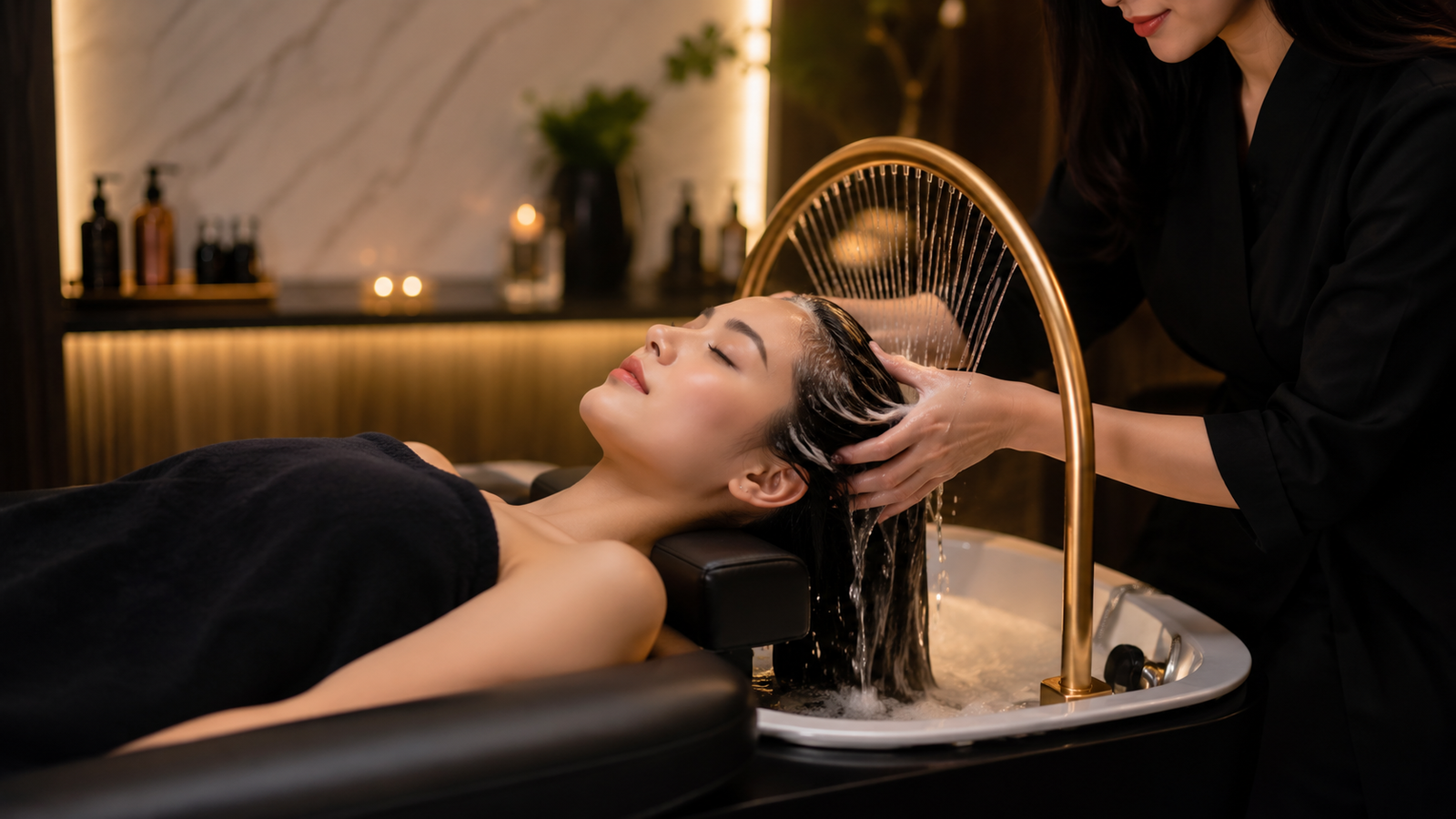
Head Spa in a hair salon is a service that combines scalp care, washing, massage, relaxation and a professional beauty ritual. For the client, it is a premium experience. For the salon, it is a chance to increase the value of each visit, improve client retention and stand out from ordinary hair washing services.
In this guide, we explain how to build a Head Spa service: what type of workstation you need, how to choose a Head Spa wash unit or wash bed, which cosmetics to use, how to plan the treatment protocol, how to create packages and what mistakes to avoid when introducing Head Spa into a hair salon or beauty salon.
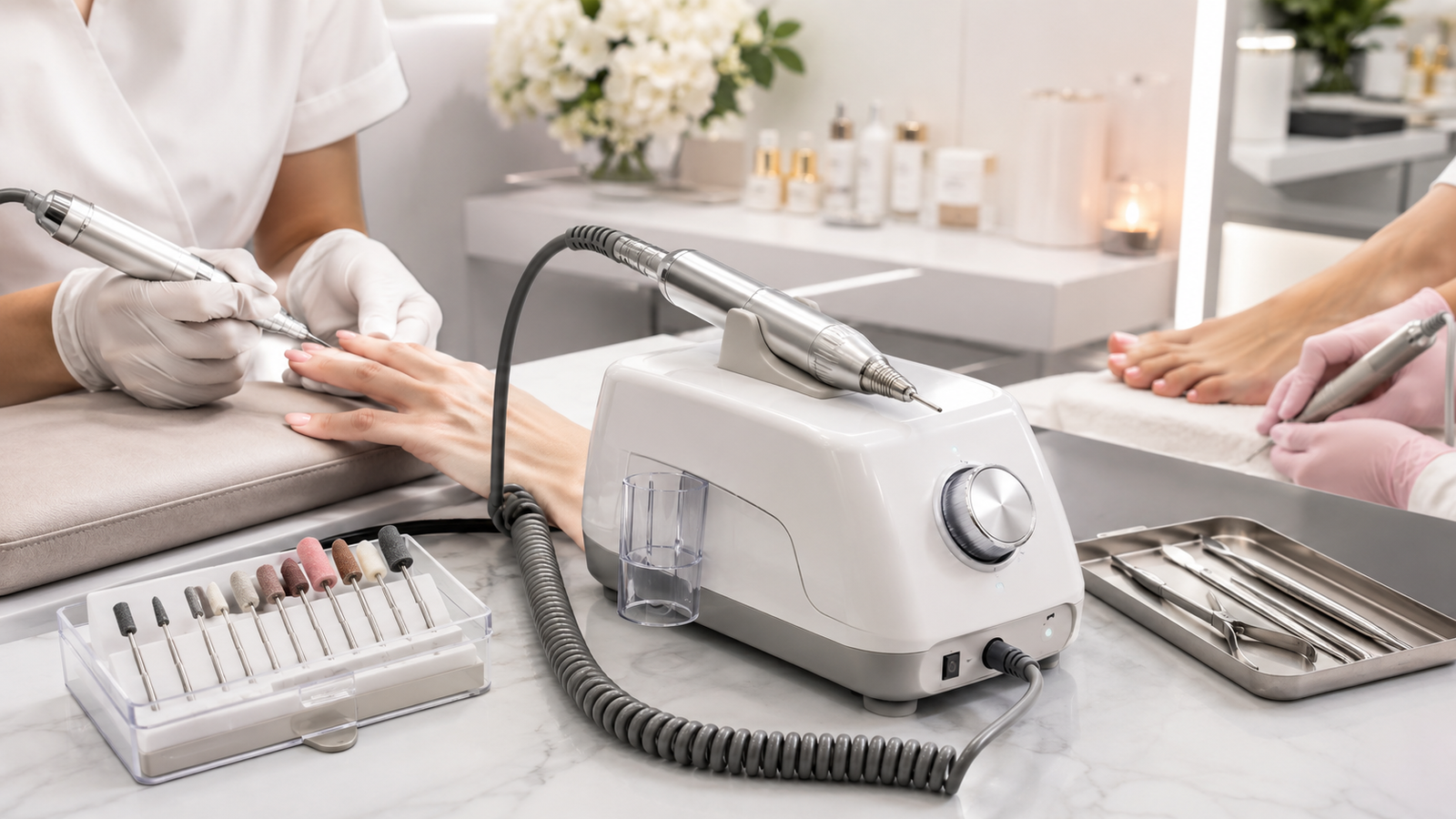
A nail drill machine is one of the most important devices in manicure, pedicure and professional salon work. It helps prepare cuticles, remove gel polish or gel, smooth the surface, prepare the nail plate and speed up many stages of nail styling. A good nail drill increases precision, shortens working time and improves the comfort of the nail stylist, but only when the model matches real use.
In this guide, we explain how to choose a nail drill machine for home use, beauty salon, manicure, pedicure and podiatry. We look at speed, power, torque, handpiece, vibrations, bit changing system, cordless work, nail drill bits, ergonomics and safety. This helps you choose a device that is not a random purchase, but a real working tool.
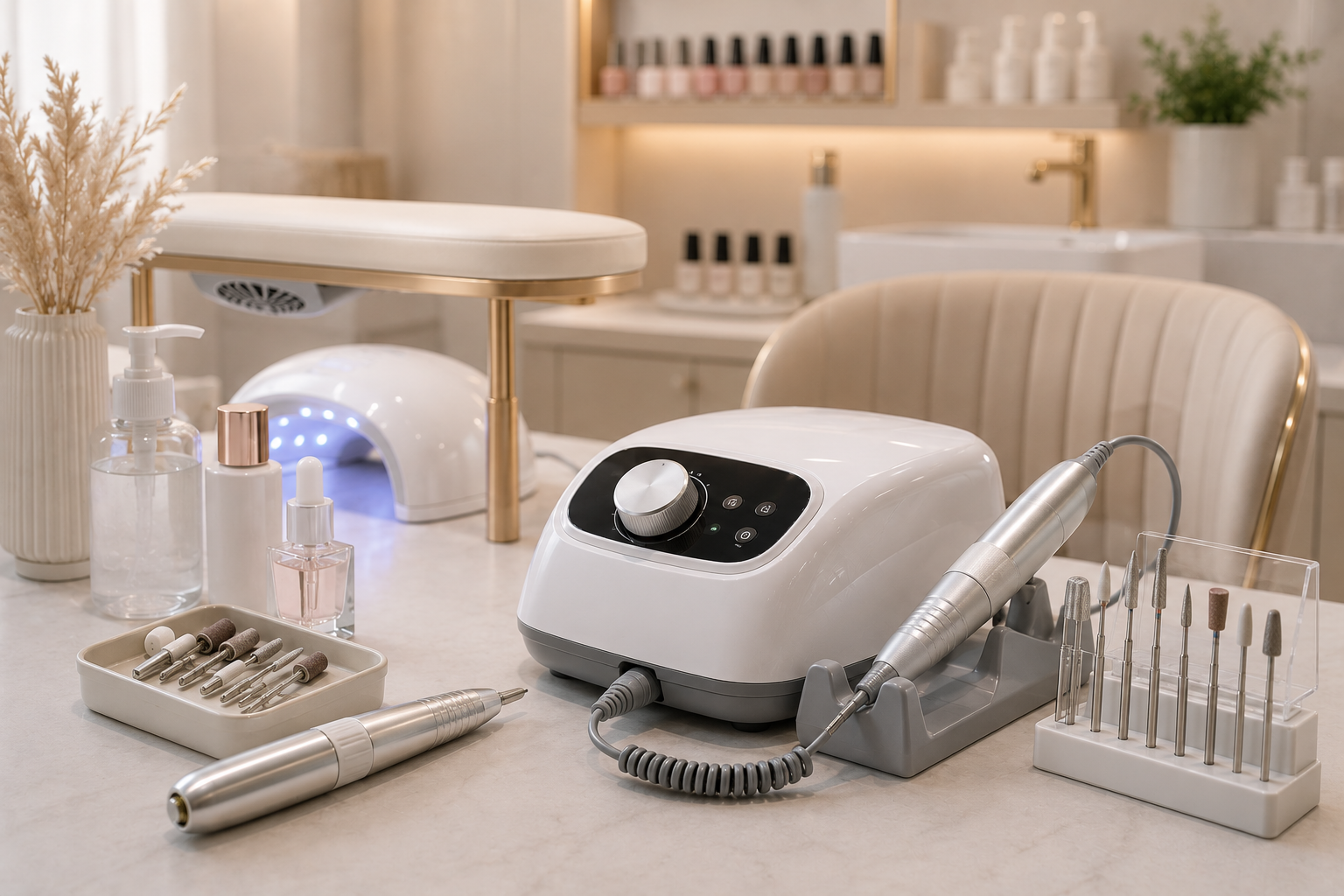
How to set up a beauty salon from scratch so that it is functional, aesthetic, comfortable for the client and practical in daily work? Good beauty salon equipment is not only a chair and a lamp, but a complete system: cosmetic furniture, treatment devices, stools, trolleys, lamps, tools, accessories, nail products, pedicure equipment, workstation organisation, hygiene and a logical room layout.
In this guide, we explain how to plan beauty salon equipment step by step: from choosing services, treatment chairs, lighting and beauty devices to manicure, pedicure, podiatry and a practical starter checklist. This helps avoid random purchases and build a salon that looks professional and truly supports daily work.

Gel polish wrinkles, does not cure or lifts from the nail? This is one of the most common problems in gel polish manicure, both at home and in the salon. The cause may be a colour layer that is too thick, the wrong UV LED lamp, curing time that is too short, poor nail plate preparation, product touching the cuticles, a greasy nail surface, dust residue or incorrect base and top application.
In this guide, we explain why gel polish wrinkles, does not cure or peels off, how to recognise a technical mistake and how to improve manicure durability. You will learn the role of the UV LED lamp, timer, lamp power, motion sensor, nail preparation, nail drill, layer thickness, free edge sealing and correct working order.

A hairdressing wash unit is one of the most important elements of salon equipment, because it affects client comfort, the ergonomics of the hairdresser’s work, the organisation of the washing area and the professional appearance of the entire interior. Many services start or end at the wash unit: hair washing, toner rinsing, colouring, hair repair, botox, keratin, nanoplasty and after-treatment care.
In this guide, we explain how to choose a hairdressing wash unit for your salon, what to check before buying, how a fixed wash unit differs from a portable solution, when a barber wash unit is worth considering and how to evaluate the basin, chair, neck support, drainage, installation, style and working comfort. This makes it easier to choose a model for a hair salon, barbershop, beauty studio or smaller treatment room.

A UV LED nail lamp is one of the most important devices in manicure and nail styling, because it affects work comfort, service speed, even curing and the durability of gel polish, gel, builder gel and other light-cured products. The choice of a lamp should not depend only on wattage, but also on LED technology, light distribution, timer, motion sensor, low heat mode, tunnel shape, mirrored base and build quality.
In this guide, you will learn how to choose a UV LED nail lamp for home use, mobile nail styling and professional salon work. You will discover when a 48–54W lamp may be enough, when 65–72W is a better choice, what the difference is between a wired and cordless nail lamp, why the sensor and timer matter, and how to choose a lamp for gel polish, gel nails, pedicure and daily work with clients.

Which hair treatment should you choose when the hair is dry, frizzy, damaged, blonde, curly, fine or hard to style? Nanoplasty, hair botox, keratin, protein and hair lamination can all improve the appearance of the hair, but each treatment has a different purpose, different intensity and different role in professional salon work.
In this guide, we compare the most important professional hair treatments by desired effect: straightening, smoothing, repair, anti-frizz control, reconstruction, shine, volume control and care for blonde or curly hair. This helps you choose based on what the hair really needs, not only on a popular treatment name.

Nanoplasty or keratin straightening is one of the most common questions from clients who want smoother, shinier, less frizzy and easier-to-style hair after every wash. Both treatments can create a beautiful smooth finish, but they differ in straightening power, treatment character, suitability for each hair type and the final result that can realistically be expected.
In this guide, you will learn when to choose nanoplasty, when keratin hair straightening is the better option and when protein straightening or a repairing treatment should be considered first. You will discover which treatment is suitable for thick, wavy, frizzy, blonde, bleached, dry, damaged, curly and fine hair.