




Nanoplasty or keratin straightening – what should you choose for each hair type?
Nanoplasty or keratin straightening should never be chosen only because one name is more popular or because a before-and-after photo looks impressive. The right choice depends on the hair type, condition, chemical history, client expectations, frizz level, curl pattern, porosity, hair thickness and, most importantly, whether the priority is maximum straightening, smoothness, repair, volume reduction or easier daily styling.
Hair nanoplasty is usually chosen when the client expects a stronger straightening effect, clear frizz reduction and more control over volume. Keratin hair straightening is more often associated with smoothness, softness, shine, elasticity and a more polished appearance, although modern keratin formulas can also give a very visible sleek result.
The problem begins when every smoothing treatment is sold to the client in the same way. Thick, naturally wavy hair needs a different approach than blonde hair after bleaching. Fine hair requires a different technique than curly hair. Very damaged hair may need repair first before a stronger straightening treatment is safe. That is why a professional hairdresser should always start with diagnosis, not with the product name.
Nanoplasty or keratin straightening – the main difference
The simplest difference is this: nanoplasty is more focused on straightening and volume reduction, while keratin straightening is more focused on smoothing, frizz control, softness and a more cared-for hair appearance. Both treatments can make the hair look better, but they are not always the best option for the same client.
When a client says: “I want my hair to stay straight after every wash,” the consultation usually moves towards nanoplasty or a stronger straightening treatment. When the client says: “I want my hair to be smoother, softer, less frizzy and more polished,” a keratin or protein treatment may be enough and may give a more natural result.
At Diana Beauty, salons can find categories such as permanent hair straightening, nanoplastia – the strongest hair straightening and professional keratin products such as Shinique Keratin Flow Professional Keratin Hair Straightening 1000ml.
When should you choose nanoplasty?
Hair nanoplasty is usually the best option when the client wants a strong straightening effect, less volume, less frizz and hair that dries smoother after every wash. It is a treatment for clients who do not want to fight every day with a flat iron, brush, humidity and an unpredictable hair structure.
Nanoplasty is especially suitable for hair that is:
- thick and difficult to smooth with regular care,
- wavy when the client wants a clearly straighter result,
- strongly frizzy, especially in humidity, rain or after washing,
- natural and strong and able to tolerate precise thermal work,
- resistant to styling and time-consuming to dry,
- high in volume and needs more discipline,
- previously straightened when the old effect has faded and needs refreshing.
Nanoplasty is a powerful salon service, but this does not mean every client should automatically choose it. If the hair is very damaged, brittle, overprocessed, strongly bleached or has poor elasticity, the hairdresser should first consider repair, hair botox or a milder smoothing treatment.
Nanoplasty for thick and resistant hair
On thick, natural and resistant hair, nanoplasty often gives a more spectacular result than a classic smoothing treatment. This type of hair usually needs a stronger procedure, thin sections, the right temperature and slow work with the flat iron. When the technique is correct, the treatment can significantly reduce daily drying and styling time.
Thick hair can look good directly after being blow-dried with a brush, but after washing it may return to volume and wave. That is why, with this hair type, the product alone is not enough. The thermal stage is crucial. Sections that are too thick, temperature that is too low or flat iron passes that are too fast can weaken the result.
Nanoplasty for frizzy hair
If the main problem is intense frizz, especially after washing or in humid weather, nanoplasty can be a very strong option. The treatment helps discipline the hair, reduce its reaction to moisture and smooth the hair surface. The client usually notices that the hair becomes more predictable and easier to dry smooth.
However, the hairdresser must distinguish between frizz caused by natural structure and frizz caused by damage. If the hair is frizzy because it is extremely dry, porous and brittle, repair may be needed first. If the frizz comes from natural texture, volume and porosity, nanoplasty can offer stronger control.
When should you choose keratin straightening?
Keratin hair straightening is a good choice when the client wants smoothness, softness, shine, less frizz and a more polished appearance, but does not necessarily expect maximum straightening like with nanoplasty. It is a treatment for clients who want hair that looks more elegant, smoother and easier to style, but with a more natural final effect.
Keratin straightening can work well for hair that is:
- dry and dull and needs smoothness plus shine,
- coloured and has lost elasticity and softness,
- slightly wavy and needs more order,
- frizzy, but does not require full straightening,
- medium porous and responds well to smoothing services,
- rough from heat styling and difficult to style beautifully.
Modern keratin formulas, such as Shinique Keratin Flow Professional Keratin Hair Straightening 1000ml, can combine smoothness, care and a more polished finish. This is a good direction for salons that want to offer a smoothing service without always needing the intensity of nanoplasty.
Keratin straightening for dry and dull hair
Dry and dull hair often needs a smoother surface, better shine and more softness. In this case, keratin straightening may be more suitable than a very intensive nanoplasty, especially when the client does not expect a full change in hair shape.
With dry hair, the treatment should not be selected only for the straightening effect. Sometimes the most important goal is healthier-looking hair, easier combing and less roughness after every wash. That is when keratin or proteins can be a very logical choice.
Keratin straightening for coloured hair
Coloured hair may lose shine, softness and elasticity. If the client does not want an extreme straight result but wants a more beautiful sleek surface and a more polished structure, keratin hair straightening can be a very good solution.
The hairdresser still needs to take colour history into account. Every colouring service affects the hair condition. It is important to check whether the lengths are stable, whether the ends are too weak and whether the treatment should be performed with full intensity or in a milder way.
When should you choose protein straightening?
Between nanoplasty and classic keratin straightening, there is another important group of services: protein hair straightening. It is a good choice when the hair needs smoothing, but repair, strengthening and a more flexible structure are also important.
Protein straightening can be a good option for hair that is:
- fine and should not be overloaded,
- dry and needs smoothness plus strengthening,
- damaged, but still stable enough for a smoothing treatment,
- frizzy and needs control plus softness,
- coloured and needs a more polished appearance,
- moderately wavy and should fall more elegantly.
For salons, the category protein hair straightening is worth considering, along with products such as Golden Brazil Protein hair keratin treatment set 1000ml + 500ml. This is a strong direction when a salon wants to combine smoothing with a more caring and reconstructive character.
Nanoplasty or keratin for blonde hair?
Blonde hair, especially bleached hair, always needs a careful diagnosis. The choice is not only about the treatment name, but about elasticity, porosity, damage level, bleaching history and the expected result. Blonde hair can look beautiful after smoothing, but it is also more sensitive to dryness and colour shift.
With blonde hair, the choice depends on condition:
- healthy, strong and frizzy blonde hair may respond well to properly adjusted nanoplasty,
- dry, dull and delicate blonde hair may be better suited to keratin, proteins or hair botox first,
- strongly bleached hair requires very careful work,
- cool blonde hair requires temperature control and colour-focused aftercare,
- brittle blonde hair often needs repair before straightening.
With blondes, the hairdresser should not promise a result without analysis. Even if the client wants straightening, the hair may need rebuilding first. Sometimes it is better to perform a repairing stage and only later plan a stronger smoothing service.
Nanoplasty or keratin for curly hair?
With curly hair, the key question is: does the client want to keep the curl or straighten it? If she wants to keep her curls but wants less frizz and more softness, nanoplasty may be too strong. In that case, hair botox for curls, repair or a milder anti-frizz treatment may be more logical.
If the client clearly wants to straighten curls, nanoplasty may be more suitable than a classic keratin treatment, but the technique must be very precise. Curls, especially thick and resistant curls, do not tolerate rushed work. Thin sections, stable temperature and slow flat iron passes are essential.
If the client only wants less puffiness but wants to keep curly hair, full straightening should not be promised. The consultation should focus on repair, anti-frizz control and curl care, not on permanent change of the natural structure.
Nanoplasty or keratin for fine hair?
Fine hair requires caution because it can be overloaded easily. A treatment that is too strong, too much product, a heavy mask step or the wrong temperature can make the hair look flat, heavy or greasy faster. That is why the choice for fine hair must be made carefully.
If fine hair is healthy but frizzy and slightly wavy, a milder smoothing treatment may work well. If the hair is dry, dull and weak, keratin, protein straightening or repairing hair botox may be a better fit. If the client wants a strong glass hair result, the hairdresser must first assess whether the hair can tolerate the procedure and whether the final result will not look too heavy.
Aftercare is also very important for fine hair. Even a perfectly chosen treatment can look less beautiful if the client later uses heavy masks, oils or coating products that overload the lengths.
Nanoplasty or keratin for damaged hair?
Damaged hair first needs an honest assessment. If the hair is brittle, overprocessed, strongly bleached, rubbery when wet or has poor elasticity, a strong straightening treatment may not be the best first step. The client may want a sleek result, but the hair may need repair first.
For damaged hair, possible directions include:
- repair or hair botox first when the hair is weakened,
- keratin or protein smoothing when the hair is dry but stable,
- nanoplasty only after diagnosis when the hair is strong enough,
- a strand test when the hairdresser is unsure,
- a milder technique for fine or bleached hair.
The biggest mistake is performing a strong straightening service only because the client asks for it, without checking whether the hair can safely handle the procedure. A professional salon should sometimes advise against nanoplasty and offer a safer alternative.
Treatment choice table by hair type
The choice of treatment can be simplified, but this kind of overview never replaces a full consultation. These guidelines help define the direction:
- thick, strong, wavy and resistant hair – usually nanoplasty,
- frizzy but not damaged hair – nanoplasty, keratin or proteins depending on the desired effect,
- dry, dull and rough hair – keratin, proteins or hair botox,
- blonde and bleached hair – careful keratin, proteins, hair botox or adjusted nanoplasty after diagnosis,
- fine hair – milder smoothing, keratin, proteins or hair botox,
- curly hair when the client wants to keep curls – hair botox, repair, anti-frizz,
- curly hair when the client wants straight hair – nanoplasty after detailed consultation,
- very damaged hair – repair first, then a decision about straightening.
This table can help during consultation, but every case must be assessed individually. Two photos of hair may look similar, while one head of hair is natural and strong and the other has been bleached several times. The treatment should be chosen according to the real hair condition, not only the visual appearance.
Common mistakes when choosing between nanoplasty and keratin
The biggest mistake is choosing the treatment by name, without analysing the hair. A client hears that nanoplasty gives a stronger effect, so she wants nanoplasty. Another client hears that keratin sounds more caring, so she wants keratin. But the treatment name is only the beginning of the conversation, not the final decision.
Common mistakes include:
- choosing nanoplasty for hair that is too damaged,
- choosing keratin when the client expects maximum straightening,
- not discussing whether the client wants to keep curl or wave,
- ignoring bleaching history,
- using one temperature for every client,
- giving no aftercare advice after the treatment,
- promising the same result on every hair type,
- comparing treatments only through before-and-after photos.
A professional consultation should always explain the difference between straightening, smoothing, repair and frizz reduction. The client needs to know whether she is choosing the effect of straight hair or mainly the effect of more beautiful, more polished and easier-to-manage hair.
How should a salon run the consultation?
Before the treatment, the hairdresser should ask several specific questions. This makes it easier to choose the right product, prevent disappointment and reduce complaints. Consultation is especially important for blonde, curly, damaged, fine hair and hair with a history of chemical treatments.
The key questions are:
- Does the client want straight hair or only smoother hair?
- Does the client want to keep waves or curls?
- When was the hair last coloured or bleached?
- Has the hair previously had keratin, nanoplasty, hair botox or perm?
- How does the hair react to humidity?
- Does the hair break or feel elastic after washing?
- Which products does the client use at home?
- Does the client accept smoothness without full glass hair straightness?
Only after this consultation can the hairdresser honestly decide whether nanoplasty, keratin straightening, protein straightening or a repairing treatment should come first. Consultation is what turns the service into a professional treatment instead of simply applying a product.
Products and categories worth considering
A good salon needs more than one solution. This makes it possible to match the service to the hair type and to the result the client expects. At Diana Beauty, there are several categories and products related to professional smoothing and straightening.
- Permanent hair straightening – main category for professional straightening and smoothing treatments.
- Nanoplastia – the strongest hair straightening – category for powerful nanoplasty treatments.
- NanoGold Nanoplastia Diana Beauty 500ml – organic permanent hair straightening for professional salons.
- Shinique Keratin Flow 1000ml – professional keratin straightening for smoother, more polished hair.
- Protein hair straightening – for salons that want to combine smoothness with a more caring treatment character.
- Golden Brazil Protein hair keratin treatment set 1000ml + 500ml – a protein straightening system for professional salon use.
Nanoplasty or keratin straightening – key conclusion
Nanoplasty or keratin straightening should be chosen according to the hair and the client’s expectations. Nanoplasty is the stronger direction when straightening, volume control and clear discipline are the priority. Keratin straightening is often the better choice when the client wants smoothness, softness, shine and a more polished look without maximum shape change.
There is no single ideal treatment for everyone. Blonde, curly, fine, thick, dry and damaged hair all require a different approach. That is why professional consultation is more important than the product name. The hairdresser should match the treatment to the condition of the hair, not to the trend.
A well-chosen treatment can change the client’s daily routine: less frizz, shorter drying time, more shine, easier combing and a better look after every wash. A poorly chosen treatment can be too weak, too heavy or unsuitable for the condition of the hair. The best decision always combines the client’s expectations with the real condition of the hair.
What is better: nanoplasty or keratin straightening?
Nanoplasty is better when the client wants stronger straightening and less volume. Keratin straightening is better when the main goal is smoothness, softness, shine and a more natural polished result.
Does keratin straightening make the hair straight?
Keratin straightening can make the hair clearly smoother and straighter-looking, but it is usually less focused on maximum straightening than nanoplasty. The effect depends on the product, technique and hair type.
Is nanoplasty suitable for blonde hair?
Yes, but blonde hair requires careful diagnosis. With bleached hair, the hairdresser must assess condition, elasticity, porosity and possible colour shift. Sometimes repair or a milder smoothing treatment should come first.
What should you choose for damaged hair?
For very damaged hair, repair, hair botox or a milder smoothing treatment is often better as the first step. A strong straightening treatment should only be done once the hair is stable enough.
Is protein straightening an alternative to nanoplasty and keratin?
Yes. Protein straightening can be a good option when the hair needs smoothing, but repair, softness and a more caring treatment character are also important.
Related Posts
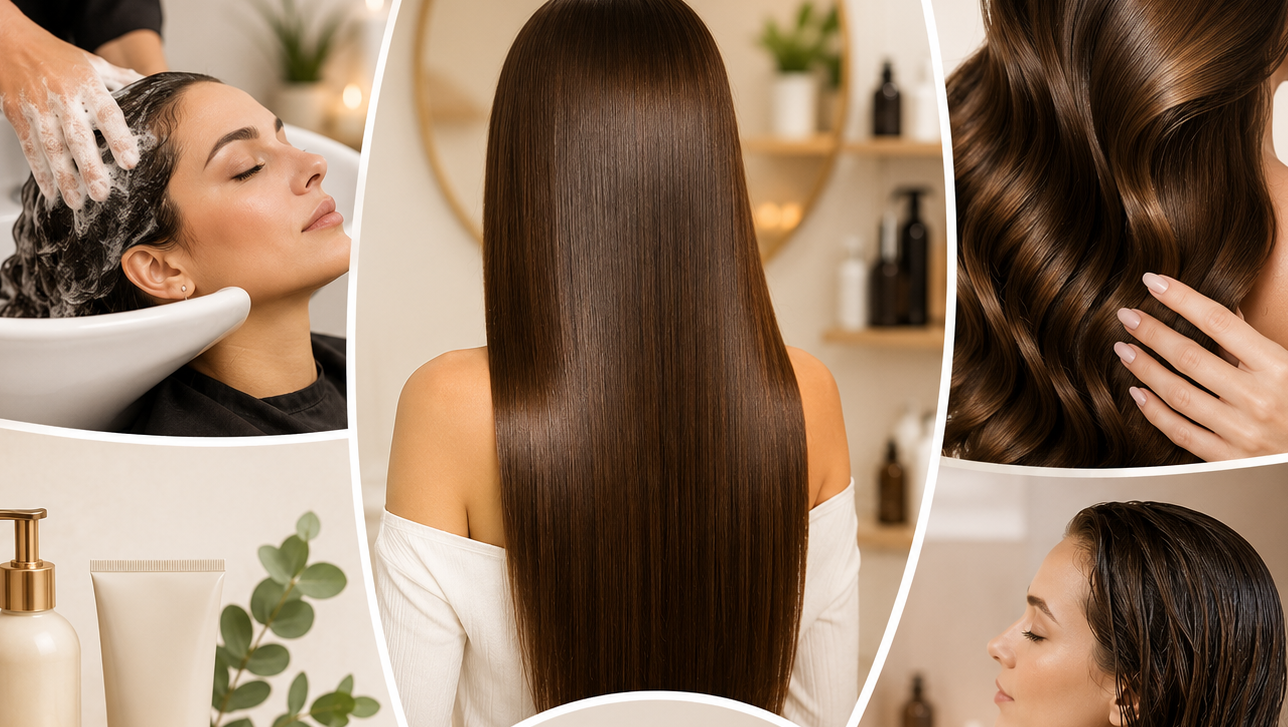
Aftercare after keratin, hair botox and nanoplasty should not always look the same, because each treatment works on the hair in a different way. Nanoplasty focuses mainly on strong smoothing and straightening, keratin and protein treatments support hair structure and smoothness, while hair botox is mainly about repair, softness, shine and reducing frizz.
In this guide, we explain how to care for hair after salon treatments, which shampoo and mask to choose, what to avoid after nanoplasty, keratin and hair botox, how to wash the hair, how to dry it and which mistakes can shorten the effect of the treatment. A good home routine should support the salon result instead of weakening it.

A cosmetic chair is one of the most important pieces of equipment in a beauty room. It affects client comfort, specialist ergonomics, interior appearance, treatment speed and the professional impression of the whole salon. A well-chosen chair makes facial treatments, lashes, brows, permanent make-up, massage, pedicure, podiatry and many other beauty services easier to perform.
In this guide, we explain how to choose a cosmetic chair for a beauty room: when a manual model is enough, when a hydraulic chair works better and when investing in an electric cosmetic chair makes sense. We cover adjustment, number of motors, upholstery, stability, armrests, footrests, dimensions, cleaning, workstation ergonomics and the most common mistakes when buying a treatment chair.
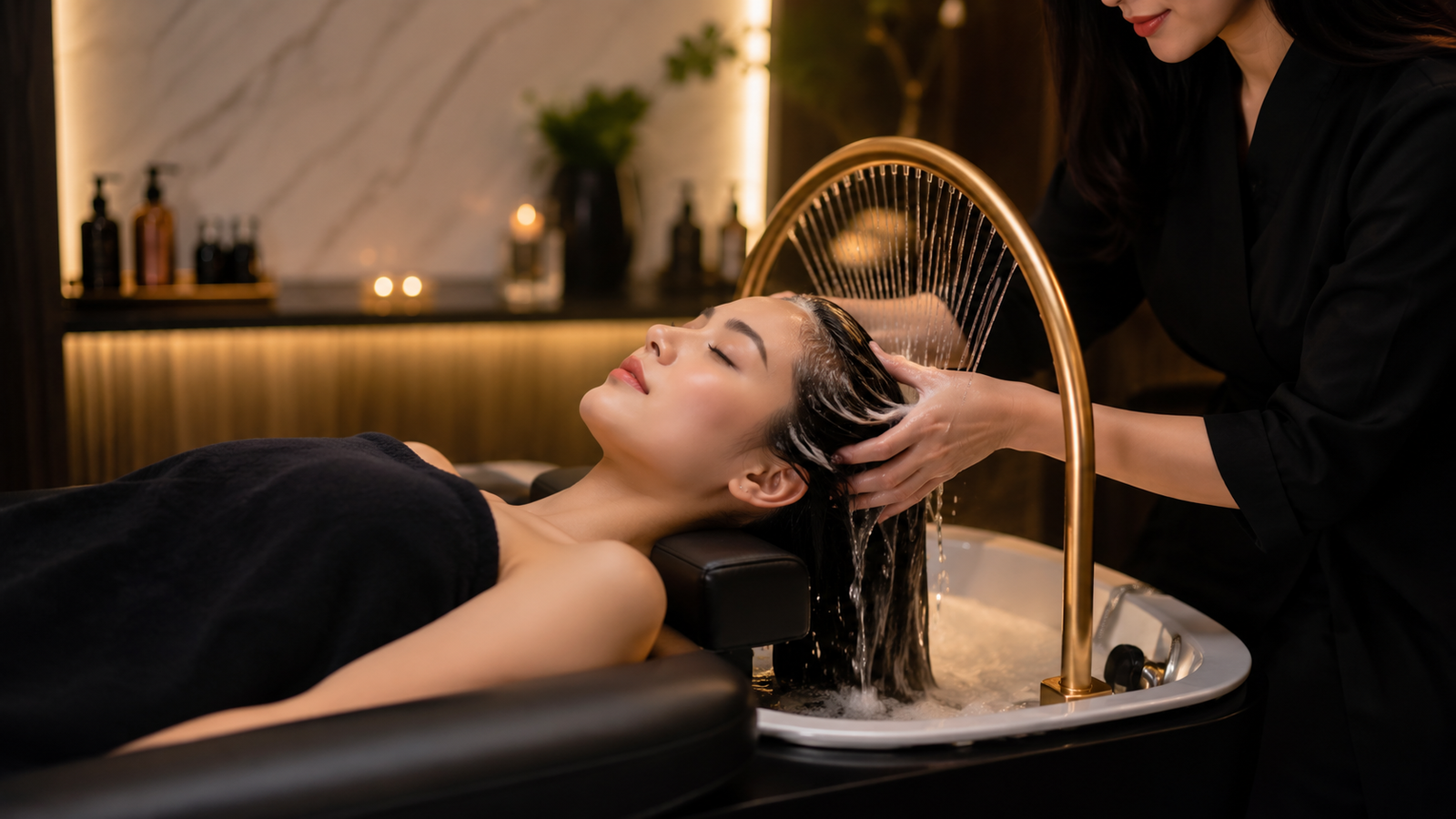
Head Spa in a hair salon is a service that combines scalp care, washing, massage, relaxation and a professional beauty ritual. For the client, it is a premium experience. For the salon, it is a chance to increase the value of each visit, improve client retention and stand out from ordinary hair washing services.
In this guide, we explain how to build a Head Spa service: what type of workstation you need, how to choose a Head Spa wash unit or wash bed, which cosmetics to use, how to plan the treatment protocol, how to create packages and what mistakes to avoid when introducing Head Spa into a hair salon or beauty salon.
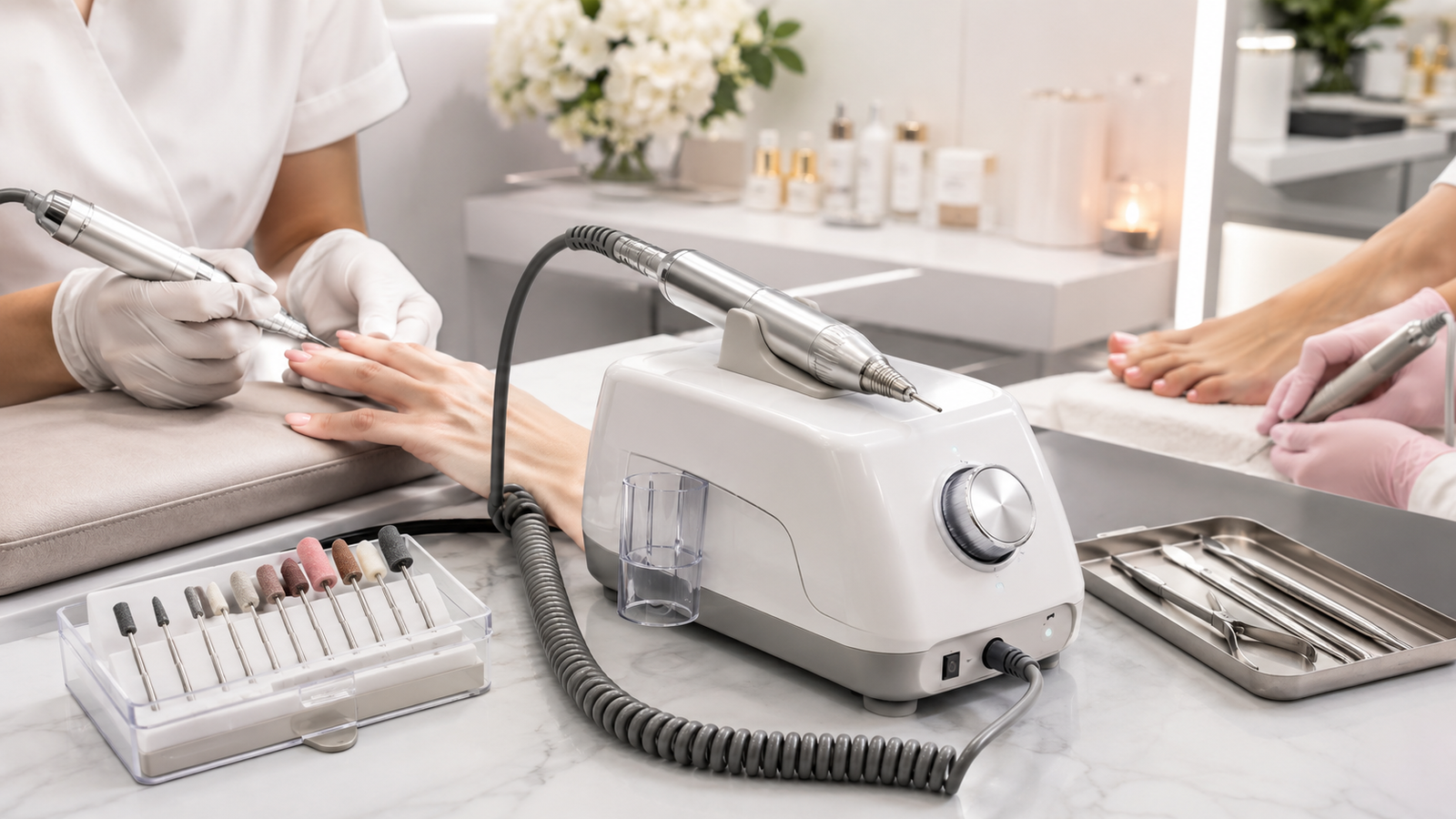
A nail drill machine is one of the most important devices in manicure, pedicure and professional salon work. It helps prepare cuticles, remove gel polish or gel, smooth the surface, prepare the nail plate and speed up many stages of nail styling. A good nail drill increases precision, shortens working time and improves the comfort of the nail stylist, but only when the model matches real use.
In this guide, we explain how to choose a nail drill machine for home use, beauty salon, manicure, pedicure and podiatry. We look at speed, power, torque, handpiece, vibrations, bit changing system, cordless work, nail drill bits, ergonomics and safety. This helps you choose a device that is not a random purchase, but a real working tool.
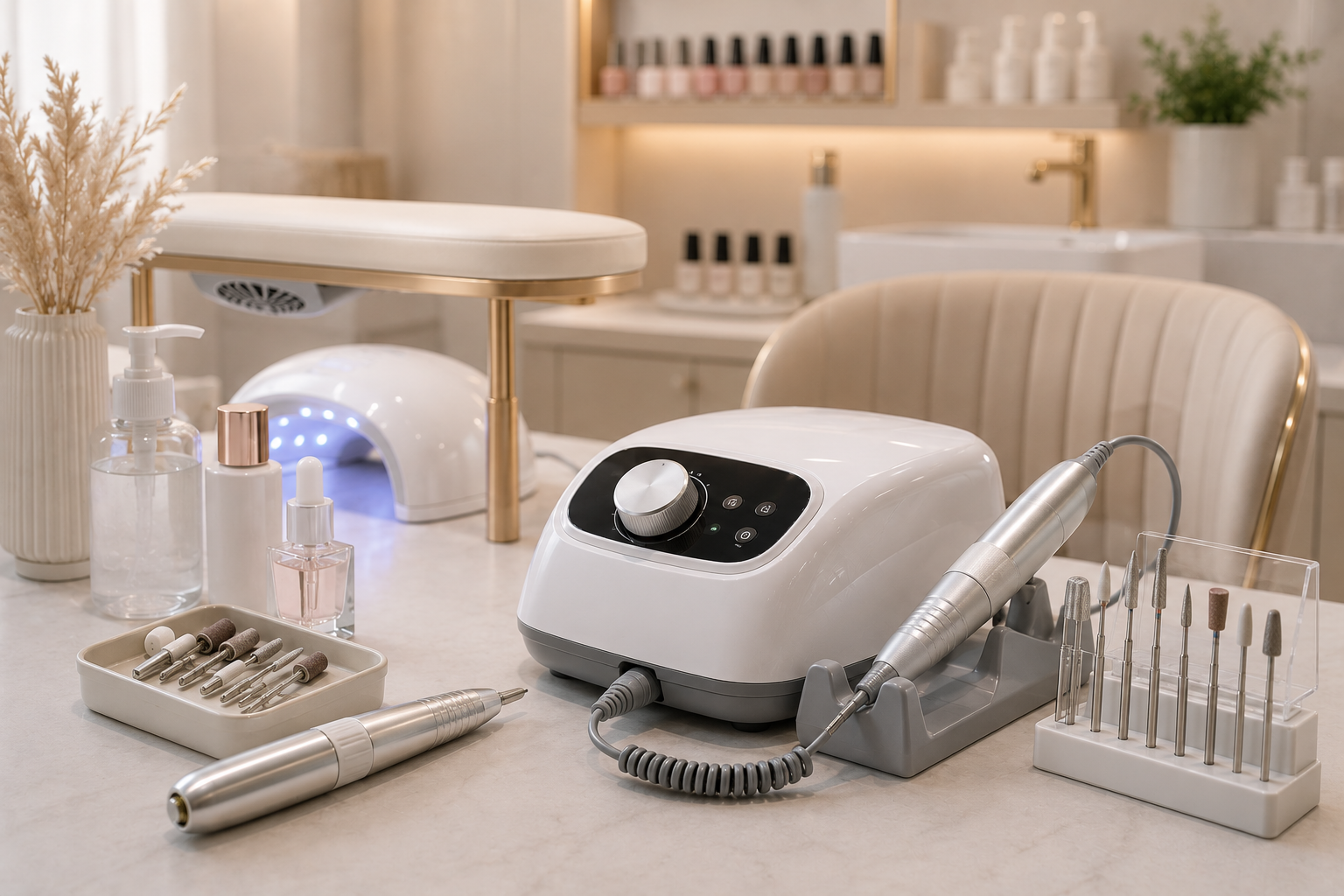
How to set up a beauty salon from scratch so that it is functional, aesthetic, comfortable for the client and practical in daily work? Good beauty salon equipment is not only a chair and a lamp, but a complete system: cosmetic furniture, treatment devices, stools, trolleys, lamps, tools, accessories, nail products, pedicure equipment, workstation organisation, hygiene and a logical room layout.
In this guide, we explain how to plan beauty salon equipment step by step: from choosing services, treatment chairs, lighting and beauty devices to manicure, pedicure, podiatry and a practical starter checklist. This helps avoid random purchases and build a salon that looks professional and truly supports daily work.

Gel polish wrinkles, does not cure or lifts from the nail? This is one of the most common problems in gel polish manicure, both at home and in the salon. The cause may be a colour layer that is too thick, the wrong UV LED lamp, curing time that is too short, poor nail plate preparation, product touching the cuticles, a greasy nail surface, dust residue or incorrect base and top application.
In this guide, we explain why gel polish wrinkles, does not cure or peels off, how to recognise a technical mistake and how to improve manicure durability. You will learn the role of the UV LED lamp, timer, lamp power, motion sensor, nail preparation, nail drill, layer thickness, free edge sealing and correct working order.

A hairdressing wash unit is one of the most important elements of salon equipment, because it affects client comfort, the ergonomics of the hairdresser’s work, the organisation of the washing area and the professional appearance of the entire interior. Many services start or end at the wash unit: hair washing, toner rinsing, colouring, hair repair, botox, keratin, nanoplasty and after-treatment care.
In this guide, we explain how to choose a hairdressing wash unit for your salon, what to check before buying, how a fixed wash unit differs from a portable solution, when a barber wash unit is worth considering and how to evaluate the basin, chair, neck support, drainage, installation, style and working comfort. This makes it easier to choose a model for a hair salon, barbershop, beauty studio or smaller treatment room.

A UV LED nail lamp is one of the most important devices in manicure and nail styling, because it affects work comfort, service speed, even curing and the durability of gel polish, gel, builder gel and other light-cured products. The choice of a lamp should not depend only on wattage, but also on LED technology, light distribution, timer, motion sensor, low heat mode, tunnel shape, mirrored base and build quality.
In this guide, you will learn how to choose a UV LED nail lamp for home use, mobile nail styling and professional salon work. You will discover when a 48–54W lamp may be enough, when 65–72W is a better choice, what the difference is between a wired and cordless nail lamp, why the sensor and timer matter, and how to choose a lamp for gel polish, gel nails, pedicure and daily work with clients.

Which hair treatment should you choose when the hair is dry, frizzy, damaged, blonde, curly, fine or hard to style? Nanoplasty, hair botox, keratin, protein and hair lamination can all improve the appearance of the hair, but each treatment has a different purpose, different intensity and different role in professional salon work.
In this guide, we compare the most important professional hair treatments by desired effect: straightening, smoothing, repair, anti-frizz control, reconstruction, shine, volume control and care for blonde or curly hair. This helps you choose based on what the hair really needs, not only on a popular treatment name.

Hair botox treatment is a professional repairing and smoothing service designed to improve the look and feel of dry, frizzy, dull, weakened, bleached or hard-to-manage hair. Unlike nanoplasty, its main goal is not maximum straightening, but repair, hydration, softness, shine and frizz reduction.
In this guide, you will learn what botox for hair is, when to choose this treatment, how it differs from nanoplasty and keratin straightening, which type of hair botox is best for blonde, curly, dry or heavily damaged hair, and how to care for the hair after the treatment to maintain softness, elasticity, shine and a healthy-looking finish for as long as possible.