



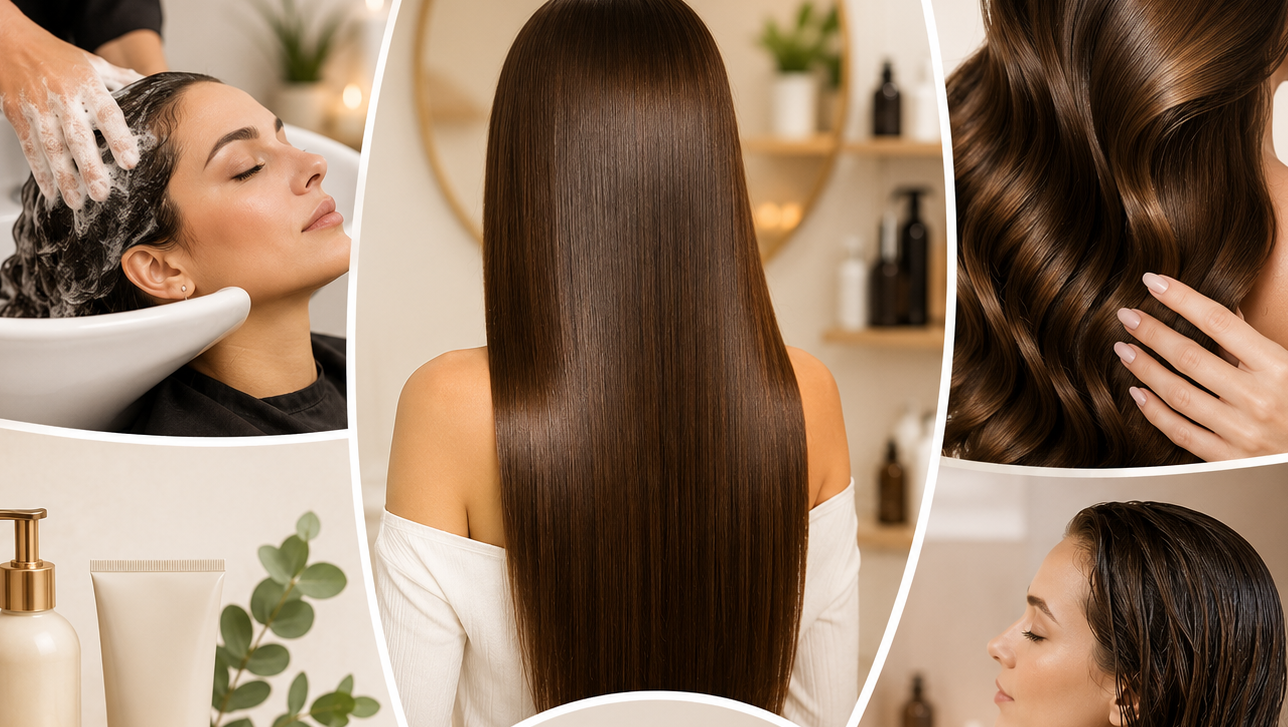
Aftercare after keratin, hair botox and nanoplasty – how does the home routine differ after treatments?
Aftercare after keratin, hair botox and nanoplasty has a major impact on how long the hair stays smooth, soft, shiny and easy to style. The salon treatment is very important, but the final result does not end when the client leaves the chair. The shampoo, mask, washing method, drying routine, brushing and styling habits all influence how long the effect remains beautiful.
The biggest mistake is treating all treatments in the same way. Nanoplasty, keratin straightening, protein straightening, hair botox and hair lamination can all visually give smoother and shinier hair, but their purpose and home care routine are not identical. Hair after a straightening treatment needs different support than hair after an intensive repair treatment.
A good starting point is the category hair treatments and suitable shampoos. Home care should extend the salon result, not weaken it with random products that do not match treated hair.
Why is aftercare after a treatment so important?
After a professional treatment, the hair has a specific result: smoothness, repair, reduced frizz, shine, softness, easier styling or better control. This result can be supported at home or gradually weakened. Home care does not replace the treatment, but it can help keep the effect looking good for longer.
After hair treatments, the most important elements are:
- mild shampoo that does not work like a deep cleansing product,
- mask matched to the treatment effect,
- regular hydration of the lengths,
- gentle hair drying,
- protection against high temperature,
- avoiding random strongly cleansing products,
- maintaining balance between smoothness, repair and lightness of the hair.
If the client starts using a strong cleansing shampoo, a heavy protein mask, drying styling products or overly rich oils after the treatment, the result may fade faster. The hair can become dull, stiff, heavy or frizzy again.
Aftercare after nanoplasty
Aftercare after nanoplasty should support the smooth, straight and soft effect. Nanoplasty is a treatment strongly focused on straightening and disciplining the hair, so the home routine should be mild, regular and not aggressively cleansing. The most important rule is to avoid shampoos that cleanse too strongly and may reduce the smoothing effect faster.
After nanoplasty, the best routine includes:
- shampoo without strong sulfates,
- smoothing or hydrating mask,
- gentle brushing,
- drying the hair after washing,
- avoiding deep cleansing shampoo after the treatment,
- protecting the hair from dryness,
- regular care of lengths and ends.
Before the treatment, a cleansing shampoo is needed, but after the treatment it works against the result. After services such as amino acid nanoplasty or nanoplasty, the client should switch immediately to a gentler routine.
What should you avoid after nanoplasty?
After nanoplasty, avoid anything that can strongly dry or aggressively cleanse the hair. This applies especially to deep cleansing shampoos, strong volumising shampoos, scalp peels used too often and products that are not designed for hair after smoothing treatments.
The most common mistakes after nanoplasty are:
- using a strongly cleansing shampoo after the treatment,
- not using a mask after washing,
- sleeping with wet hair,
- drying the hair chaotically without smoothing the hair direction,
- using products that are too heavy for fine hair,
- not using heat protection during thermal styling.
Aftercare after keratin straightening
Aftercare after keratin straightening should maintain smoothness, softness, shine and better manageability. Keratin and protein treatments work differently from a regular mask. After this type of service, the hair needs mild cleansing and regular protection of the lengths, but not an excessive amount of extra protein in the home routine.
After keratin, it is worth using:
- mild shampoo for hair after treatments,
- hydrating or smoothing mask,
- conditioner or product that makes detangling easier,
- heat protection when using a dryer or straightener,
- gentle drying in the direction of the hair,
- regular, but not overly heavy care.
With treatments such as Shinique Keratin Flow professional keratin hair straightening or protein straightening, home care should protect the smoothing effect and not disturb the balance of the hair.
Do you need to use protein after keratin?
Not always. This is a common mistake. Clients often think that because they had a keratin or protein treatment, they should constantly use protein products. In practice, after this type of treatment, the hair usually needs mild cleansing, hydration, smoothing and protection more than extra protein. Too much protein can make some hair types feel stiff, dull or heavy.
That is why observation is important. If the hair stays flexible, smooth and elastic, the routine works well. If it becomes stiff, dry or difficult to comb, it is better to reduce heavy protein products and add more hydration.
Aftercare after hair botox
Aftercare after hair botox is different from aftercare after straightening treatments. Hair botox focuses mainly on repair, softness, shine and reducing frizz. Its main goal is not always completely straight hair. That is why the home routine should focus on maintaining nourishment, softness and a smooth hair surface.
After hair botox, a good routine includes:
- mild shampoo or shampoo after treatments,
- repairing or hydrating mask,
- anti-frizz care,
- products that smooth and seal the lengths,
- regularity instead of random intensive treatments,
- protection against dryness.
In the category hair repair and anti-frizz, care should be matched to the condition of the hair. Very dry hair needs more hydration and nourishment. Fine hair needs a lighter mask. Bleached hair often requires more caution with products that may overload it.
Can you use regular shampoo after hair botox?
You can, but not every regular shampoo is suitable. If the shampoo cleanses strongly, dries the hair, makes it feel rough or causes tangling, it can weaken the soft effect of hair botox. A milder shampoo and a suitable mask are usually a better choice.
Aftercare after hair lamination
Aftercare after hair lamination should maintain shine, softness and a smooth hair surface. Lamination does not work in the same way as nanoplasty or keratin. It is more of a sealing, shine-enhancing and visual-improvement ritual. That is why it is important not to wash the effect away too quickly with aggressive cleansing or overload the hair with heavy products.
After services from the Instaglam category or the product Instaglam hair sealing treatment and hair lamination, mild cleansing, a smoothing mask and light length care work best. The lamination effect likes regularity, but not excess.
Which shampoo after hair treatments?
Shampoo after keratin, hair botox and nanoplasty should be mild, suitable for treated hair and not drying. It does not need to foam heavily and it does not need to make the hair feel “squeaky clean”. After smoothing treatments, the hair should be clean, but not aggressively stripped.
A good shampoo after treatment should:
- cleanse the scalp and hair gently,
- not dry out the lengths,
- not leave the hair rough after rinsing,
- support softness and smoothness,
- match the washing frequency,
- fit the type of treatment performed.
The safest choice is to use products from the shampoos category, because they are suitable for professional hair care. A random shampoo may cleanse too strongly or not match the effect of the treatment.
Which mask after keratin, hair botox and nanoplasty?
A mask after hair treatments should complement the shampoo. Shampoo cleanses, while the mask helps maintain softness, slip, smoothness and better elasticity. Hair after treatments should not be left without care on the lengths, especially if it is bleached, porous, long or previously weakened.
A mask can be chosen like this:
- after nanoplasty – smoothing, hydrating, supporting softness,
- after keratin – hydrating and smoothing, without excessive protein,
- after hair botox – repairing, nourishing or anti-frizz,
- after lamination – light, smoothing and shine-enhancing,
- after protein straightening – balanced, so the hair does not become stiff.
A mask does not need to be applied in a huge amount. Regular use, correct processing time and thorough rinsing are more important. Too much product can weigh down the hair, especially when it is fine or delicate.
How to wash hair after a treatment?
Washing hair after a treatment should be calm and gentle. The lengths do not need to be rubbed hard. Shampoo should be applied mainly to the scalp, and the foam that runs through the lengths is usually enough to cleanse the hair. Mask should be applied mainly to the lengths and ends, unless the product is also designed for the scalp.
A simple washing routine:
- wet the hair thoroughly with lukewarm water,
- apply mild shampoo to the scalp,
- massage with fingertips, without aggressive rubbing,
- let the foam rinse through the lengths,
- apply mask to lengths and ends,
- leave the product for the recommended time,
- rinse thoroughly,
- blot the hair with a towel, do not rub hard.
After smoothing treatments, it is better to dry the hair instead of leaving it wet for hours. Controlled drying helps lay the hair in a smooth direction and reduce frizz.
Drying and styling after treatments
After nanoplasty, keratin and hair botox, drying matters more than many clients think. If the hair air-dries, especially in humid air or after sleeping with wet hair, it may look less smooth. A hair dryer used calmly and in the direction of the hair helps maintain a more elegant salon-like result.
At home, remember:
- gently blot the hair with a towel,
- detangle without pulling,
- dry in the direction of the cuticle,
- do not overheat one section for too long,
- use heat protection with high temperature,
- do not sleep with wet hair.
A straightener does not need to be a daily fix after every wash. If the treatment and care routine are well chosen, a hair dryer is often enough to maintain smoothness. If a straightener is used often, heat protection and a sensible temperature are essential.
Common mistakes after keratin, hair botox and nanoplasty
Many problems after treatments do not come from the salon product itself, but from what happens afterwards. A treatment can be performed very well, but the result can be shortened by overly strong washing, lack of mask, uncontrolled drying or random cosmetics.
The most common mistakes are:
- using cleansing shampoo after the treatment,
- not using a mask or conditioner after washing,
- washing the hair with random products,
- too much protein after protein treatments,
- weighing down fine hair with heavy masks,
- sleeping with wet hair,
- not drying the hair after washing,
- using high temperature too often without protection,
- chlorinated water, sauna and strong sun without protection,
- no consultation before changing colour or another technical treatment.
The best care is simple, but consistent. Mild shampoo, a good mask, gentle washing, drying after washing and avoiding aggressive cleansing give better results than many random products used without a plan.
How to adjust the routine to the treatment type?
The difference is easy to remember if you look at the main purpose of the treatment. Nanoplasty should keep the hair straight, smooth and disciplined. Keratin and protein support smoothness and structure. Hair botox maintains repair, softness and anti-frizz. Lamination preserves shine, sealing and lightness.
After nanoplasty:
- mild cleansing,
- smoothing mask,
- drying after washing,
- avoiding strongly cleansing shampoo.
After keratin or protein:
- mild shampoo,
- hydration and smoothing,
- caution with too much protein,
- heat protection.
After hair botox:
- repair-focused routine,
- nourishing or hydrating mask,
- frizz control,
- care adjusted to hair porosity.
After lamination:
- light smoothing care,
- mild shampoo,
- avoiding overload,
- protecting shine and softness.
Categories worth checking
When planning aftercare after treatments, it is worth combining knowledge about the service with the right product category. This way, the client does not buy random cosmetics, but products that support the desired effect.
- Hair treatments – main category for professional salon treatments and treatment products.
- Amino acid nanoplasty – treatments for strong smoothing and straightening of the hair.
- Nanoplasty – category for strong straightening and smoothing.
- Hair repair and anti-frizz – products and treatments focused on repair, softness and reduced frizz.
- Shinique Keratin Flow professional keratin hair straightening – example of a keratin treatment for smoother hair.
- Protein straightening – category for smoothing treatments with a protein component.
- Golden Brazil Protein hair keratin treatment set – example of a professional protein treatment.
- Instaglam – category for sealing and laminating hair treatments.
- Shampoos – important category for home care after salon services.
Aftercare after keratin, hair botox and nanoplasty - key conclusion
Aftercare after keratin, hair botox and nanoplasty must match the type of treatment. After nanoplasty, mild washing, smoothing and avoiding strong cleansing are the most important. After keratin and protein treatments, the focus is balance between smoothness, hydration and protection. After hair botox, repair, softness, shine and anti-frizz are the key points.
The best home routine does not have to be complicated. A good shampoo after treatments, a suitable mask, gentle washing, drying after washing and avoiding products that weaken the effect are usually enough. Regularity gives better results than intensive but random treatments used from time to time.
If the client does not know what to choose, she should look at the type of treatment and the condition of the hair. Hair after straightening needs protection of the smooth effect. Hair after botox needs nourishment and anti-frizz. Hair after lamination needs lightness and shine. This type of aftercare genuinely supports the salon result.
Which shampoo should you use after nanoplasty?
It is best to use a mild shampoo after treatments, without a strong cleansing effect. Deep cleansing shampoo is needed before the treatment, but after the treatment it may shorten the smoothing effect.
Can you use a regular mask after keratin?
Yes, if the mask is mild, smoothing and not too heavy. It is better to avoid random masks with a very strong protein effect if the hair becomes stiff after using them.
What is the difference between aftercare after hair botox and nanoplasty?
After hair botox, the focus is repair, softness and anti-frizz. After nanoplasty, the main goal is maintaining straightness, smoothness and discipline of the hair.
Do you need to dry hair after treatments?
Yes, controlled drying helps maintain the smooth effect and reduce frizz. Sleeping with wet hair can make the hair look less polished after the treatment.
What should you avoid most after keratin, hair botox and nanoplasty?
Avoid strong cleansing shampoos after the treatment, skipping masks, sleeping with wet hair, random cosmetics and using high temperature too often without heat protection.
Related Posts

A cosmetic chair is one of the most important pieces of equipment in a beauty room. It affects client comfort, specialist ergonomics, interior appearance, treatment speed and the professional impression of the whole salon. A well-chosen chair makes facial treatments, lashes, brows, permanent make-up, massage, pedicure, podiatry and many other beauty services easier to perform.
In this guide, we explain how to choose a cosmetic chair for a beauty room: when a manual model is enough, when a hydraulic chair works better and when investing in an electric cosmetic chair makes sense. We cover adjustment, number of motors, upholstery, stability, armrests, footrests, dimensions, cleaning, workstation ergonomics and the most common mistakes when buying a treatment chair.
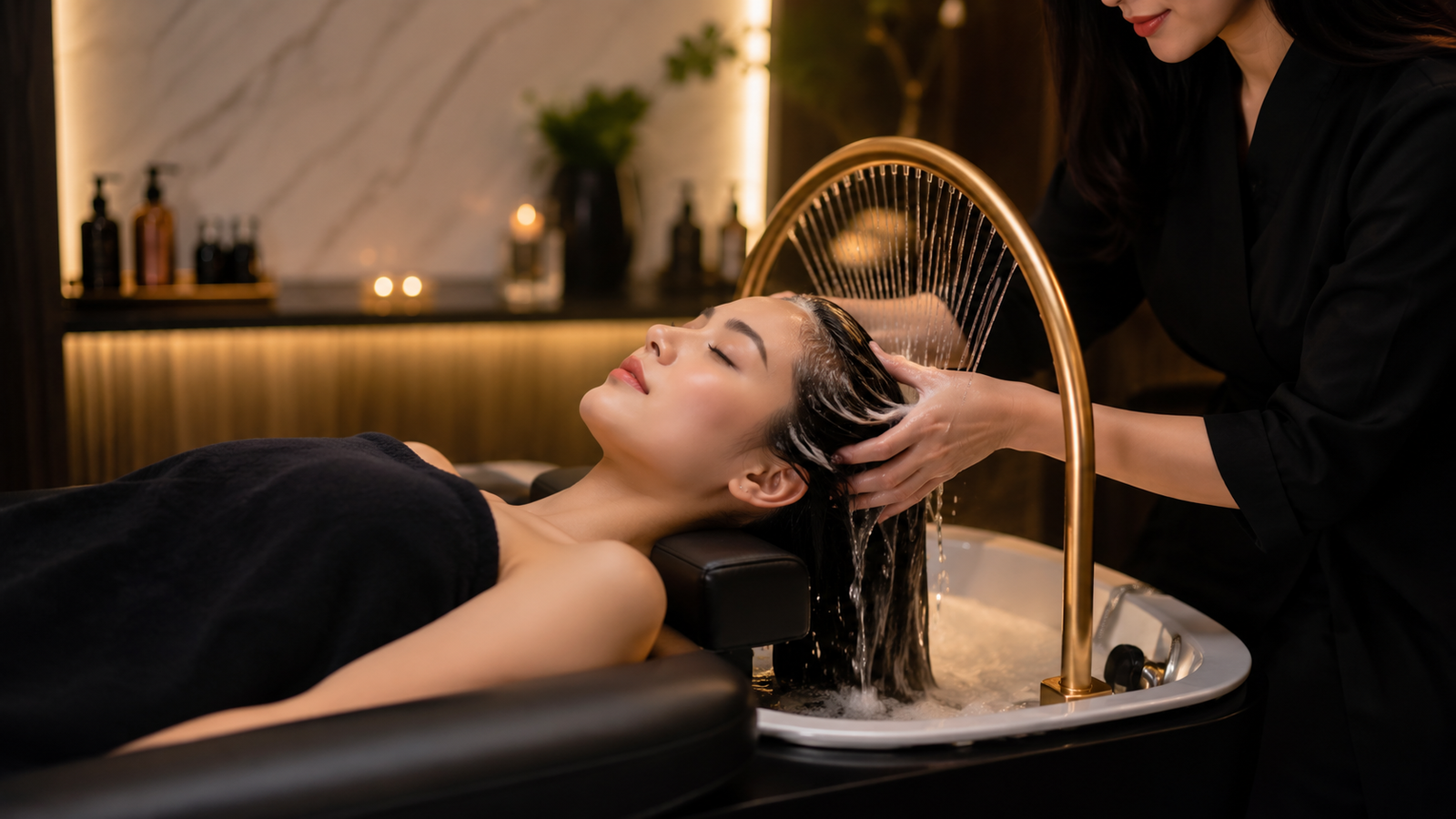
Head Spa in a hair salon is a service that combines scalp care, washing, massage, relaxation and a professional beauty ritual. For the client, it is a premium experience. For the salon, it is a chance to increase the value of each visit, improve client retention and stand out from ordinary hair washing services.
In this guide, we explain how to build a Head Spa service: what type of workstation you need, how to choose a Head Spa wash unit or wash bed, which cosmetics to use, how to plan the treatment protocol, how to create packages and what mistakes to avoid when introducing Head Spa into a hair salon or beauty salon.
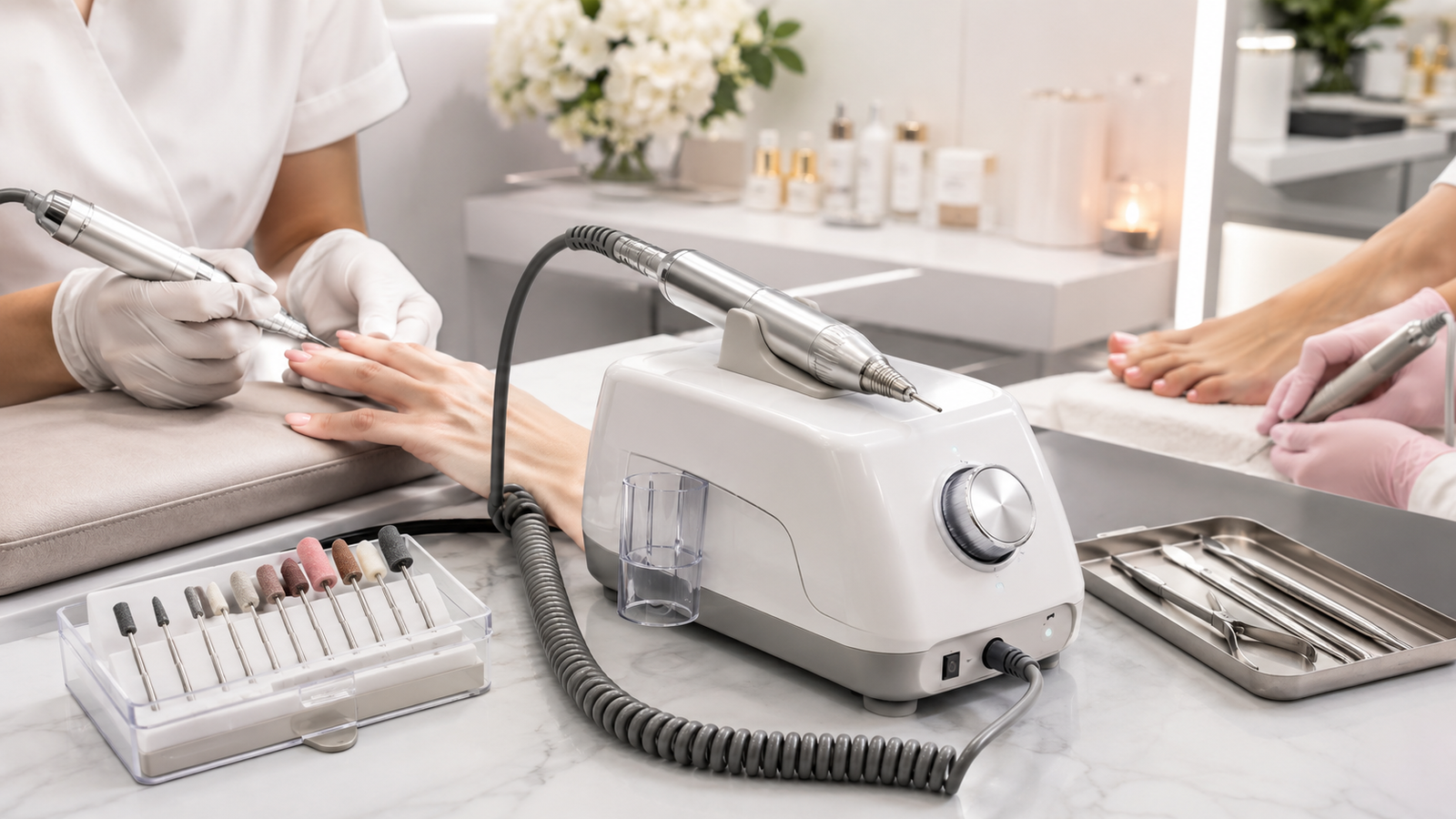
A nail drill machine is one of the most important devices in manicure, pedicure and professional salon work. It helps prepare cuticles, remove gel polish or gel, smooth the surface, prepare the nail plate and speed up many stages of nail styling. A good nail drill increases precision, shortens working time and improves the comfort of the nail stylist, but only when the model matches real use.
In this guide, we explain how to choose a nail drill machine for home use, beauty salon, manicure, pedicure and podiatry. We look at speed, power, torque, handpiece, vibrations, bit changing system, cordless work, nail drill bits, ergonomics and safety. This helps you choose a device that is not a random purchase, but a real working tool.
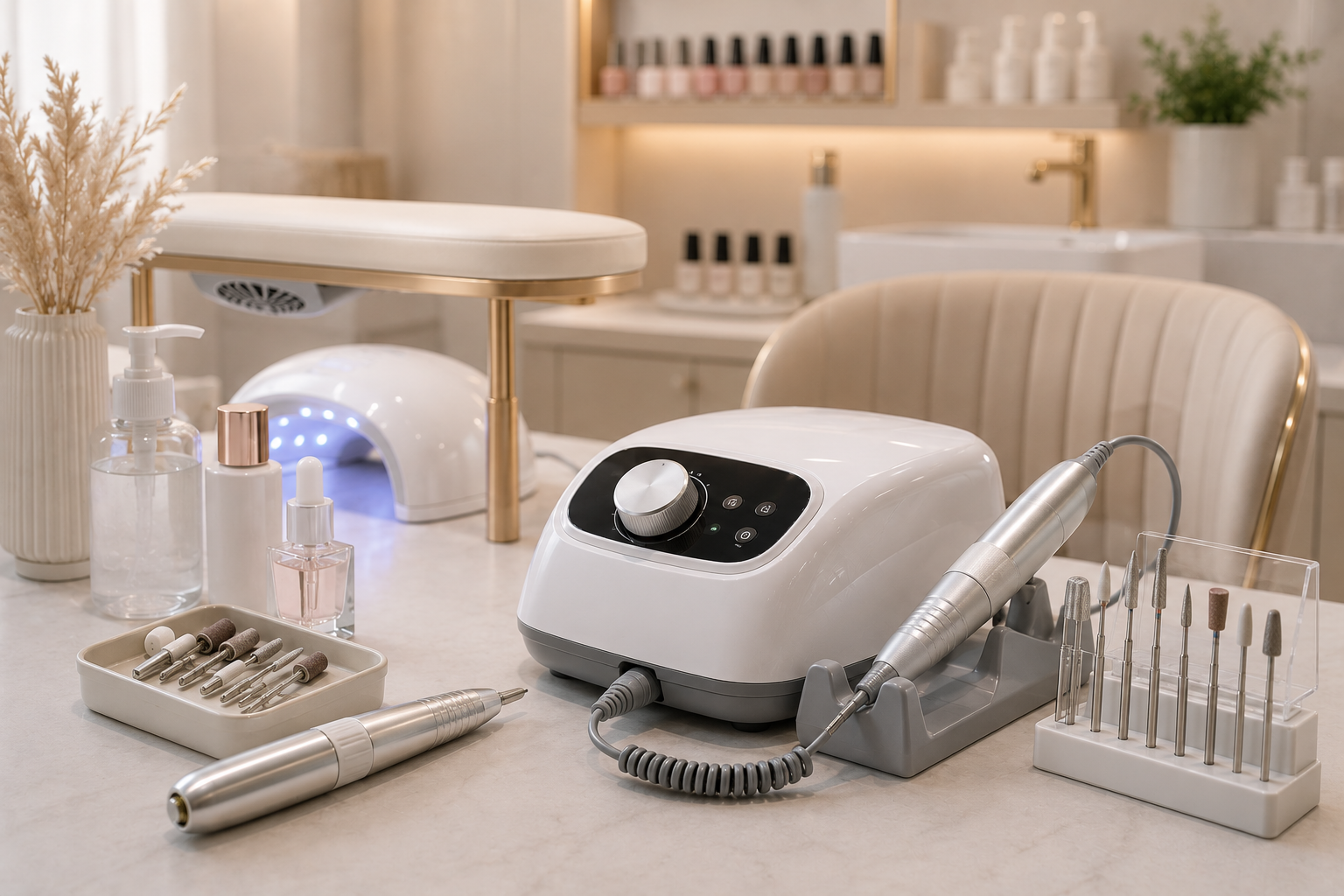
How to set up a beauty salon from scratch so that it is functional, aesthetic, comfortable for the client and practical in daily work? Good beauty salon equipment is not only a chair and a lamp, but a complete system: cosmetic furniture, treatment devices, stools, trolleys, lamps, tools, accessories, nail products, pedicure equipment, workstation organisation, hygiene and a logical room layout.
In this guide, we explain how to plan beauty salon equipment step by step: from choosing services, treatment chairs, lighting and beauty devices to manicure, pedicure, podiatry and a practical starter checklist. This helps avoid random purchases and build a salon that looks professional and truly supports daily work.

Gel polish wrinkles, does not cure or lifts from the nail? This is one of the most common problems in gel polish manicure, both at home and in the salon. The cause may be a colour layer that is too thick, the wrong UV LED lamp, curing time that is too short, poor nail plate preparation, product touching the cuticles, a greasy nail surface, dust residue or incorrect base and top application.
In this guide, we explain why gel polish wrinkles, does not cure or peels off, how to recognise a technical mistake and how to improve manicure durability. You will learn the role of the UV LED lamp, timer, lamp power, motion sensor, nail preparation, nail drill, layer thickness, free edge sealing and correct working order.

A hairdressing wash unit is one of the most important elements of salon equipment, because it affects client comfort, the ergonomics of the hairdresser’s work, the organisation of the washing area and the professional appearance of the entire interior. Many services start or end at the wash unit: hair washing, toner rinsing, colouring, hair repair, botox, keratin, nanoplasty and after-treatment care.
In this guide, we explain how to choose a hairdressing wash unit for your salon, what to check before buying, how a fixed wash unit differs from a portable solution, when a barber wash unit is worth considering and how to evaluate the basin, chair, neck support, drainage, installation, style and working comfort. This makes it easier to choose a model for a hair salon, barbershop, beauty studio or smaller treatment room.

A UV LED nail lamp is one of the most important devices in manicure and nail styling, because it affects work comfort, service speed, even curing and the durability of gel polish, gel, builder gel and other light-cured products. The choice of a lamp should not depend only on wattage, but also on LED technology, light distribution, timer, motion sensor, low heat mode, tunnel shape, mirrored base and build quality.
In this guide, you will learn how to choose a UV LED nail lamp for home use, mobile nail styling and professional salon work. You will discover when a 48–54W lamp may be enough, when 65–72W is a better choice, what the difference is between a wired and cordless nail lamp, why the sensor and timer matter, and how to choose a lamp for gel polish, gel nails, pedicure and daily work with clients.

Which hair treatment should you choose when the hair is dry, frizzy, damaged, blonde, curly, fine or hard to style? Nanoplasty, hair botox, keratin, protein and hair lamination can all improve the appearance of the hair, but each treatment has a different purpose, different intensity and different role in professional salon work.
In this guide, we compare the most important professional hair treatments by desired effect: straightening, smoothing, repair, anti-frizz control, reconstruction, shine, volume control and care for blonde or curly hair. This helps you choose based on what the hair really needs, not only on a popular treatment name.

Nanoplasty or keratin straightening is one of the most common questions from clients who want smoother, shinier, less frizzy and easier-to-style hair after every wash. Both treatments can create a beautiful smooth finish, but they differ in straightening power, treatment character, suitability for each hair type and the final result that can realistically be expected.
In this guide, you will learn when to choose nanoplasty, when keratin hair straightening is the better option and when protein straightening or a repairing treatment should be considered first. You will discover which treatment is suitable for thick, wavy, frizzy, blonde, bleached, dry, damaged, curly and fine hair.

Hair botox treatment is a professional repairing and smoothing service designed to improve the look and feel of dry, frizzy, dull, weakened, bleached or hard-to-manage hair. Unlike nanoplasty, its main goal is not maximum straightening, but repair, hydration, softness, shine and frizz reduction.
In this guide, you will learn what botox for hair is, when to choose this treatment, how it differs from nanoplasty and keratin straightening, which type of hair botox is best for blonde, curly, dry or heavily damaged hair, and how to care for the hair after the treatment to maintain softness, elasticity, shine and a healthy-looking finish for as long as possible.